
 English
 русский
 عربى
عربىRectangular Pattern WPC Door Precision Starts at Extrusion
A grid of clean rectangular lines across a door face looks simple enough on a catalog photo, but getting those lines straight, evenly spaced, and consistent from the first panel to the thousandth is a different problem entirely. A rectangular pattern WPC door gets its surface geometry from the extrusion process itself, which means the pattern's crispness is decided long before any finishing step touches the panel.
Why the Pattern Depends on the Die, Not the Finish
Wood-plastic composite material is formed by blending wood powder with polymer resin and pushing the mixture through a shaped die under heat and pressure. For a rectangular pattern WPC door, the die geometry itself carries the grid design, so the rectangular lines are extruded into the panel surface rather than printed or routed on afterward. This is a meaningfully different approach than carving a pattern into a solid panel, since the die has to maintain consistent depth and edge sharpness across the full width of continuous material moving through it.
What the Wood-to-Resin Ratio Actually Controls
The blend ratio between wood powder and polymer resin affects more than the finished color and texture — it also determines how sharply the material holds a die-formed edge. A rectangular pattern WPC door with crisp, well-defined lines generally depends on a formulation dense enough to resist rounding at the pattern edges as the extruded profile cools, since a softer or more resin-heavy mix can slightly slump before it fully sets, blurring the geometry the die was meant to produce.
Keeping Grid Lines Straight Across a Full Panel
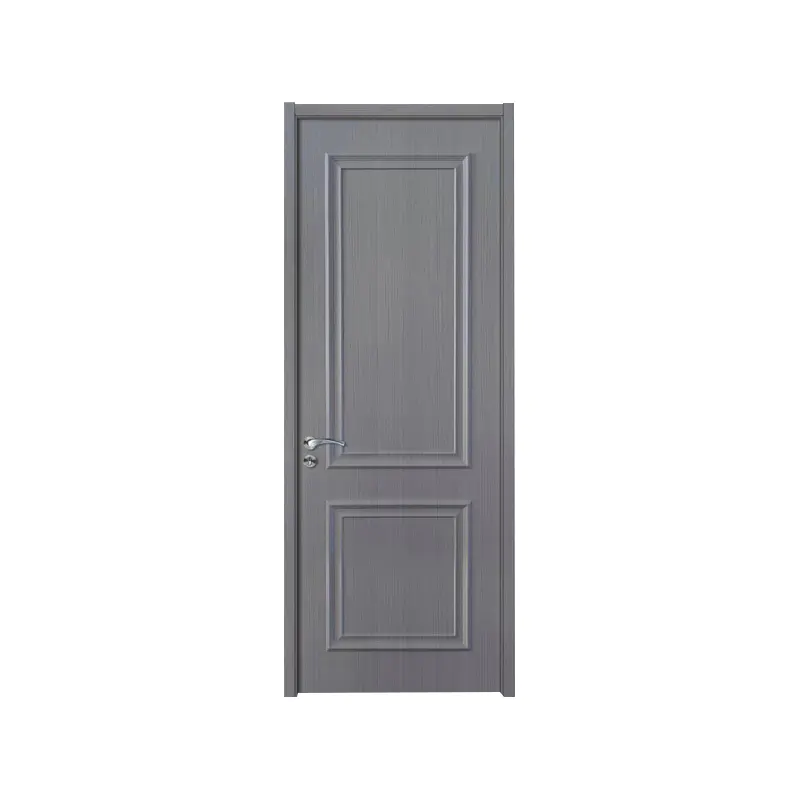
Because the rectangular grid runs across the entire door face rather than sitting in one localized area, any inconsistency in extrusion speed or cooling rate shows up as a visible waviness in what should be a perfectly straight line. Production teams making a rectangular pattern WPC door at volume generally treat line straightness as a first-pass quality check, since a subtly warped grid pattern is more noticeable to the eye than a similar deviation would be on a smooth, unpatterned panel.
Where a Grid Pattern Reads Differently Than a Smooth Panel
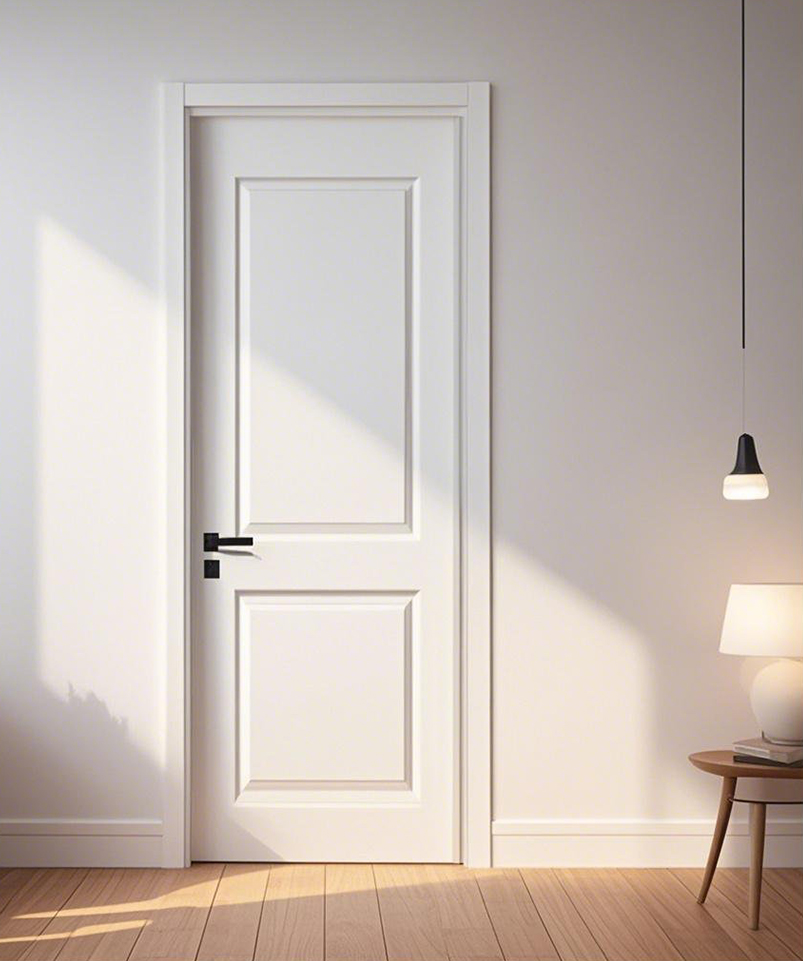
A rectangular grid gives a door a more structured, architectural look compared with a smooth WPC panel or a deep-carved traditional design, which makes a rectangular pattern WPC door a common choice in contemporary or minimalist interiors where clean geometric lines are part of the intended style. The same pattern also tends to photograph and read consistently under different lighting conditions, since the repeating grid does not rely on shadow-casting depth the way a heavily carved panel does.
Finish Options Without Changing the Grid
Once the extruded panel is formed, a rectangular pattern WPC door can generally still be painted or polished in a range of finishes without altering the underlying grid geometry, since the pattern is structural to the panel rather than a surface coating. This separates finish selection from pattern selection in the production process, letting the same die-formed panel serve different color programs for different markets or buyers.
What Buyers Typically Compare
For distributors and specifiers sourcing this style, useful comparison points include grid line depth and edge sharpness, panel flatness across the full door face, wood-to-resin ratio relative to the intended climate and humidity exposure, and how consistently the pattern holds up across a full production batch rather than a single sample. Buyers ordering across multiple units for the same project can also compare how closely a rectangular pattern WPC door batch matches from one production run to the next, since even small die wear over time can gradually soften line sharpness in ways that are easy to miss on an individual panel but visible once doors are installed side by side. Zhejiang Optima Door Industry Co., Ltd., producing WPC doors from its facility in Jiangshan, Quzhou city, Zhejiang province, includes this pattern within a broader WPC door range that also covers vertical-line, raised-line, and glass-window designs extruded through the same general process.




Copyright@ Zhejiang Optima Door Industry Co.,Ltd. All Rights Reserved.
PVC And WPC Doors Company
