
 English
 русский
 عربى
عربىWhy Barn Door Surface Stability Matter Long Term?
A barn door may look perfectly flat during installation.
Several months later, however, small changes sometimes begin appearing around the edges. Certain doors develop slight warping near the lower section, while others no longer slide as smoothly as before because the panel shape has changed subtly over time.
Inside a Barn Door Factory, these problems are usually discussed long before the door reaches the customer.
Experienced manufacturers know the challenge is not only producing a visually attractive panel. The more difficult part is controlling how the door behaves after exposure to seasonal humidity, indoor temperature changes, and long-term structural stress.
Actually, many stability problems begin inside the material long before visible deformation appears on the surface.
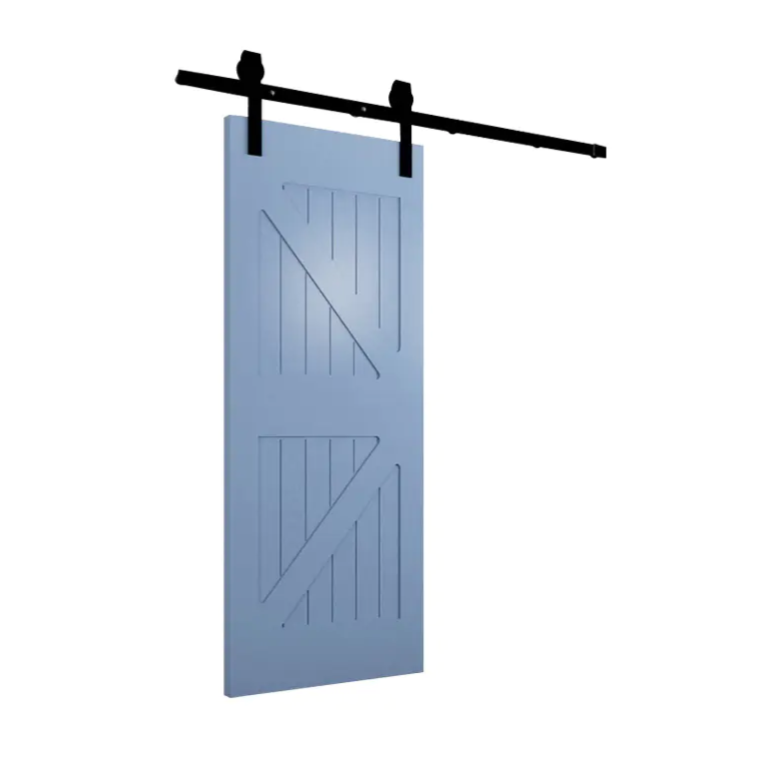
Moisture Balance Starts Before Production
Inside a Barn Door Factory, wood-based panels rarely enter production immediately after arrival.
Manufacturers often monitor moisture content carefully because different materials absorb and release humidity at different speeds. If moisture levels remain uneven inside the board structure, the finished door may gradually shift after installation as the material continues adjusting to the surrounding environment.
This becomes especially important for:
- MDF core panels
- laminated surfaces
- veneer finishes
- solid wood sections
- multi-layer composite boards
Actually, two panels cut from the same batch may still react differently later depending on internal moisture distribution during manufacturing.
Large Door Panels Handle Stress Unevenly
Compared with smaller cabinet components, barn doors cover a relatively wide surface area.
Inside a Barn Door Factory, larger panels create additional stress because their own weight continuously pulls against the sliding hardware and internal structure. Over time, unsupported sections may respond differently to gravity and environmental movement.
This becomes more noticeable on:
- extra-wide doors
- taller panel systems
- heavy decorative styles
- double-track installations
- thick overlay designs
Actually, some slight warping only becomes visible after the door hangs vertically for extended periods.
Surface Finishing Influences Long-Term Stability
Many people focus mainly on the decorative appearance of a barn door finish.
Inside manufacturing, however, surface coating also affects how quickly moisture enters or leaves the panel itself. A properly sealed surface helps reduce uneven expansion caused by changing humidity.
That is why a Barn Door Factory often pays close attention to:
- edge sealing consistency
- coating thickness
- curing conditions
- sanding uniformity
- surface adhesion
Actually, poorly protected panel edges often absorb moisture faster than the visible front surface.
Temperature Changes Affect Sliding Performance
Barn doors do not only need to stay visually flat.
Inside real homes, slight panel movement may also influence how smoothly the hardware system operates. A door produced inside a Barn Door Factory may perform differently after installation depending on indoor climate conditions and seasonal expansion behavior.
This becomes common in:
- coastal climates
- humid bathrooms
- heated interiors
- sun-exposed walls
- poorly ventilated spaces
Actually, some customers first notice structural movement because the sliding action feels heavier rather than because the door itself visibly changes shape.
Internal Structure Matters More Than Decoration
Decorative patterns often receive most of the attention during purchasing decisions.
Inside a Barn Door Factory, however, engineers usually focus more heavily on core structure, bonding stability, and panel balance. Surface appearance may look identical between two doors while the internal construction behaves very differently after years of use.
Factories often evaluate:
- core density
- adhesive stability
- reinforcement layout
- panel symmetry
- weight distribution
Actually, long-term door stability often depends more on internal stress control than on visible surface design.
Small Manufacturing Details Affect Daily Use
To many homeowners, a barn door mainly appears to be a decorative sliding panel.
Inside a Barn Door Factory, however, maintaining long-term flatness and smooth movement requires controlling moisture balance, structural tension, surface sealing, and material stability throughout the production process.
The difficult part is not making the door look straight during assembly.
It is keeping the panel stable after years of gravity, humidity, seasonal expansion, and repeated sliding movement inside real living environments.



Copyright@ Zhejiang Optima Door Industry Co.,Ltd. All Rights Reserved.
PVC And WPC Doors Company
