
 English
 русский
 عربى
Melamine Door Factory: From Decor Paper to Door Surface
A Melamine Door Factory starts with a roll of printed paper and a wood-based board, and nearly everything a buyer sees on the finished door follows from how those two are joined. The paper is soaked in melamine resin, laid on the board and pressed with heat. Melamine is a thermosetting plastic, so once the resin cures it stays set instead of softening again, which is why the surface of a melamine door resists heat, scratches and stains.
What Heat and Pressure Do to the Paper
The saturated paper carries resin that stays inactive until it meets heat and pressure. In the press at a Melamine Door Factory, the resin activates, flows into the board surface and cross-links, forming a bond between paper and board that also seals the face of the substrate. Industry bodies in North America call this product thermally fused laminate, usually shortened to TFL, and the older name thermally fused melamine still appears on many specification sheets.
The paper itself is a printed layer. Solid colours, wood grains and stone textures all come from the print, which is why a melamine door can imitate a veneer pattern without any veneer under it. Surface texture is set by the press plate, and finishes range from high gloss to matte.
Why the Core Board Shows Through
A paper layer this thin follows whatever sits beneath it. Any soft spot, density change or rough patch in the board can reach the surface after pressing, so the core is chosen for evenness. MDF and particleboard are the two cores used in the trade, and both are valued for consistent strength and a smooth, defect-free face.

MDF has a fine, uniform surface that takes routing and hinge fittings cleanly. Particleboard is also accepted as a core for melamine surfaces. A Melamine Door Factory therefore treats the board as part of the surface specification, not as a hidden filler, since the board decides how flat and clean the printed face looks once it is pressed.
Boards are normally faced on both sides, since a door leaf is seen from either side of the opening and a board with paper on both faces stays balanced instead of being pulled one way. Buyers who check Melamine Door Factory datasheets look for the board type, the paper on each face and the edge treatment listed together, because the three decide how the door sits and looks once it is installed.
Edges Are Where the Core Meets the Hand
The pressed face is the easy part to admire. A cut edge, though, exposes the core, and a melamine door carries a band around its perimeter to conceal and protect that edge. Doors are touched at the edge more than anywhere else: hands grip it, hinges attach to it, and the frame closes against it.
Edge colour is matched to the decor so that the band reads as a continuation of the face. A Melamine Door Factory that cuts, bands and presses on one site can keep these steps aligned, and that alignment shows up in how neat the corners look when a door is hung.
Pattern, Colour and Texture Options
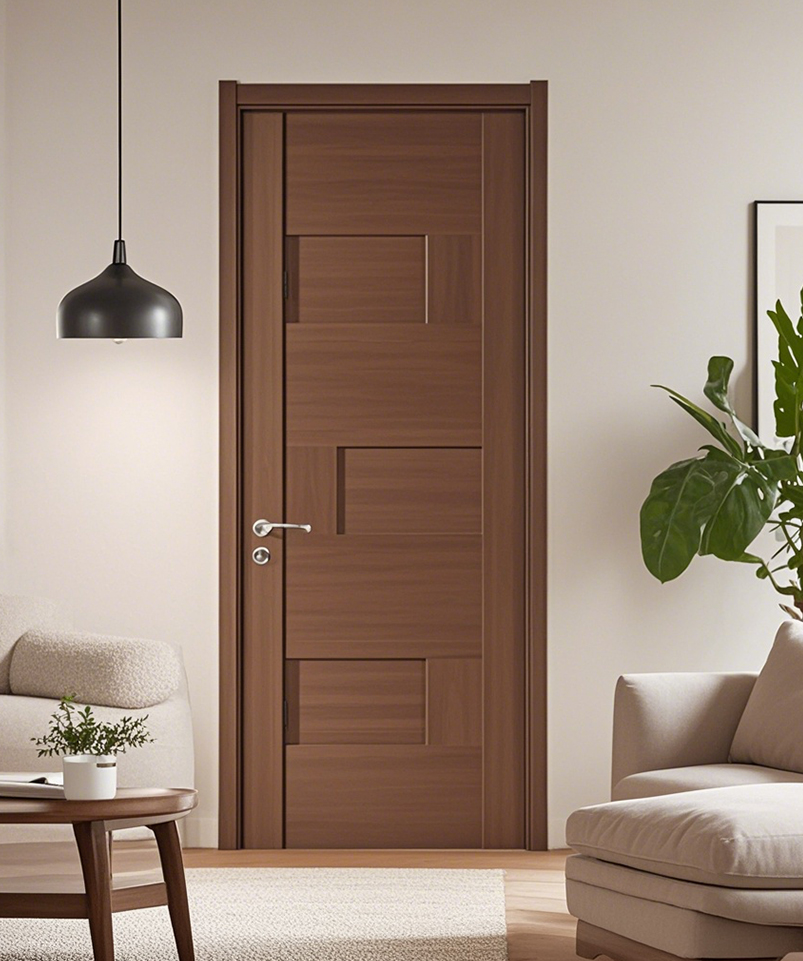
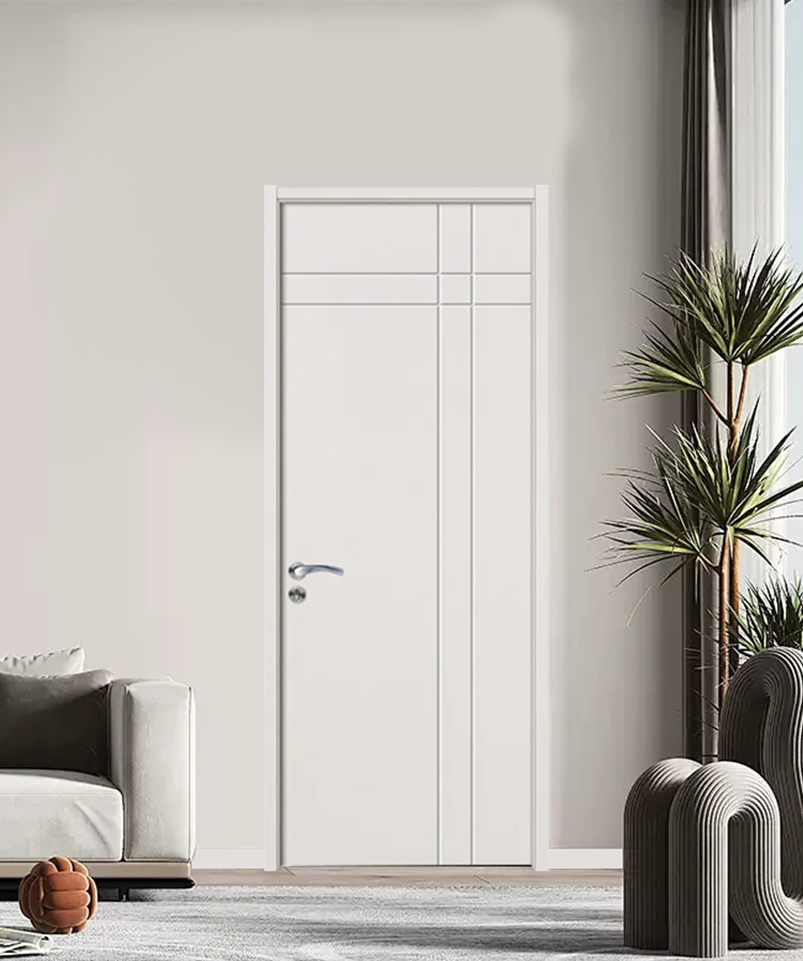
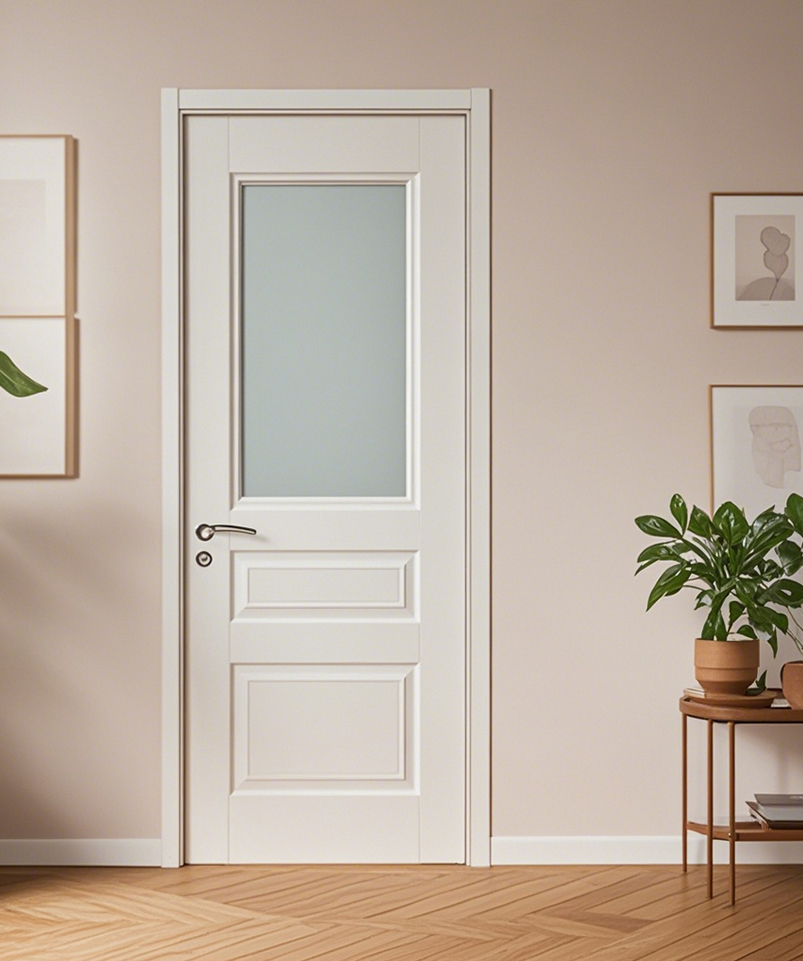
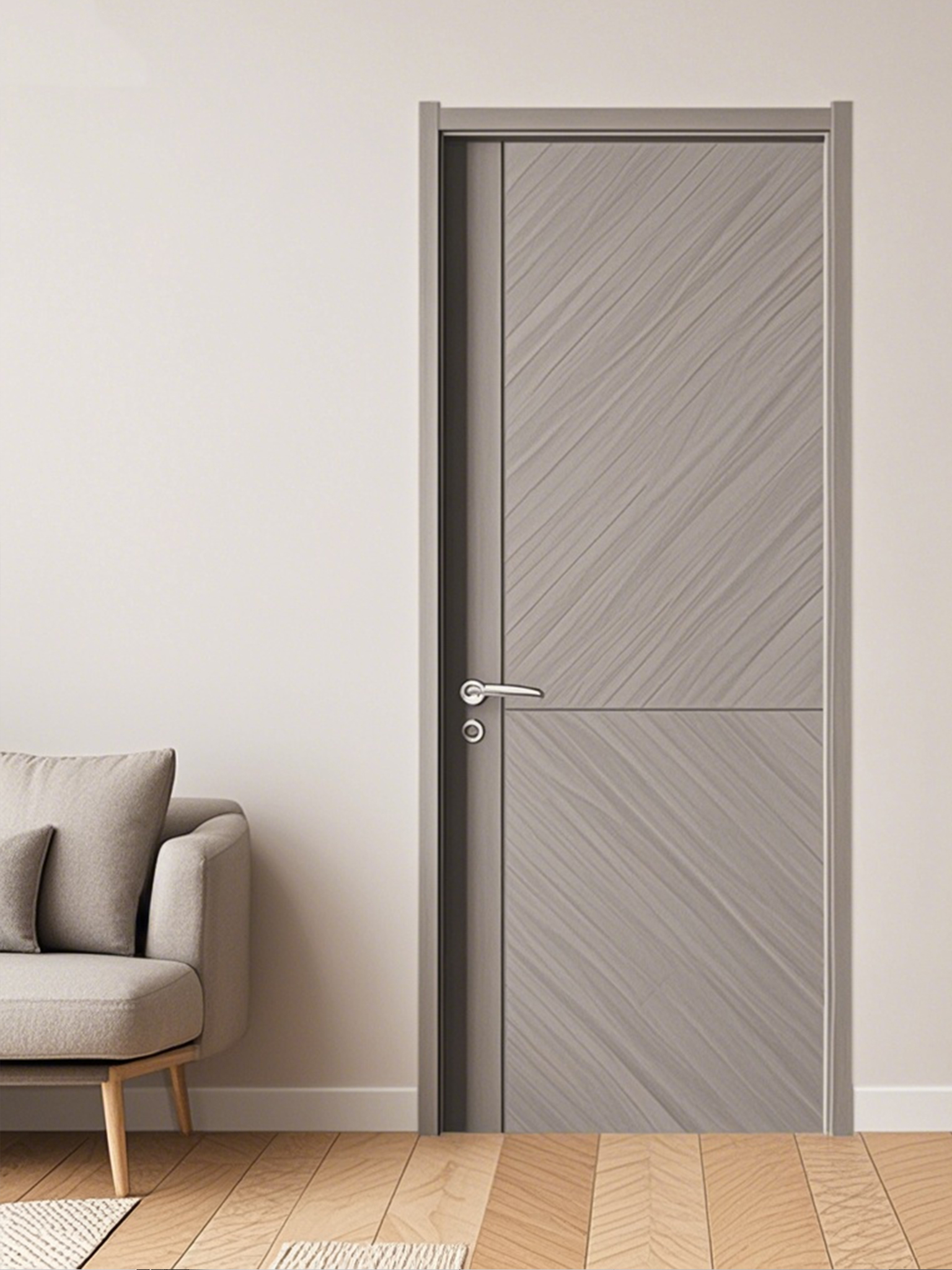
Because the design is printed, a Melamine Door Factory can offer a wide range of looks. Melamine doors suit minimal and modern interiors well, with clean lines and flat colour fields. Two-colour matching, tilted rectangles, diagonal textures, classical arch patterns and black-border designs all come from the same process with different paper and different panel layouts.
Colour and pattern can be customised to match an interior scheme, and details such as paper reference, texture and edge colour can be confirmed with the factory at the enquiry stage.
Where Melamine Doors Are Specified
Residential buyers use melamine doors for bedroom closets, pantry doors and room dividers. Commercial buyers specify them for offices and retail spaces, where doors open and close all day, and schools and industrial sites use them where large numbers of doors take daily wear.
A Melamine Door Factory with more than 20 years in interior doors and production lines from the United States, Japan and South Korea can run these projects alongside PVC and moulded door programmes, and its doors have been shipped to North America, East Asia, Europe and the Middle East.
Search habits differ by market. North American buyers often look for thermally fused laminate doors, while importers elsewhere type melamine door, and a Melamine Door Factory that uses both terms in its datasheets answers either search.



Copyright@ Zhejiang Optima Door Industry Co.,Ltd. All Rights Reserved.
PVC And WPC Doors Company
