
 English
 русский
 عربى
عربىHow Does PVC Panel Door Factory Keep Production Stable?
PVC Panel Door Factory output is rarely judged only by design or surface appearance. In many production environments, what matters more is whether each batch behaves the same during cutting, pressing, and final assembly. Small differences between production runs can become visible later during installation, even when the doors look identical at the factory stage.
Inside a PVC panel door factory, operators usually focus on consistency across batches rather than isolated product quality.
Batch Differences Are Not Always Visible Immediately
At a glance, newly produced doors often look the same.
The surface pattern matches.
The dimensions appear correct.
The weight feels similar.
However, differences may only appear during later processing steps such as drilling, frame fitting, or edge sealing.
This is where a PVC panel door factory begins to notice whether production remains stable across multiple runs instead of only one batch.
Surface Film Behavior Changes During Production
PVC door panels often rely on laminated surface layers.
When production conditions shift slightly, the bonding behavior of the surface film can also change.
Some panels show smoother adhesion.
Others require more pressure during lamination.
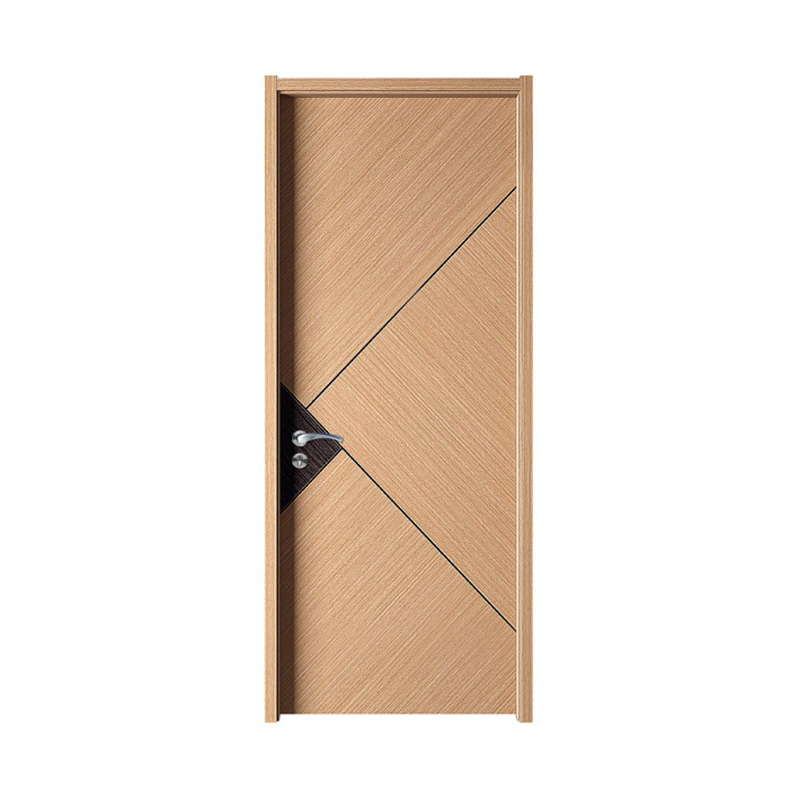
These differences are not always obvious during early inspection, but they become noticeable during downstream processing in a PVC panel door factory.
Temperature Variation Affects Line Stability
Production lines do not always operate under identical conditions.
Workshop temperature may rise during long shifts.
Cooling speed may change depending on airflow.
Equipment may behave slightly differently between morning and afternoon production.
These variations influence how evenly materials settle during forming, which is something technicians monitor closely in a PVC panel door factory environment.
Cutting Accuracy Depends On Earlier Steps
Cutting is usually considered a final step, but its accuracy depends heavily on earlier processes.
If extrusion stability shifts slightly, later cutting alignment may show small deviations.
Operators often notice this when door edges require minor adjustment before packaging.
This is one reason production teams in a PVC panel door factory pay attention to earlier-stage material behavior rather than only final machining.
Adhesion Strength Is Not Always Identical
Two panels produced on different days may respond differently during surface pressing.
Pressure timing.
Roller speed.
Material temperature.
All of these factors influence how well the surface layer bonds to the base material.
In some cases, technicians may adjust machine settings slightly during the shift to maintain stable output in a PVC panel door factory.
Small Deviations Become Visible During Assembly
During assembly, minor differences that were not noticeable earlier may become clearer.
A hinge may feel slightly tighter.
A frame may require small alignment correction.
A panel may sit differently inside the door structure.
These are not considered defects immediately, but they are tracked as part of consistency control inside a PVC panel door factory.
Production Stability Relies On Repeated Observation
Operators do not rely on a single test result.
They observe multiple cycles of production.
Morning output.
Afternoon output.
End-of-shift output.
Comparing these helps identify whether the system remains stable across time rather than under isolated conditions.
This repeated observation is a routine part of quality awareness in a PVC panel door factory.
Material Flow Behavior Is Often Adjusted During Runs
PVC materials behave slightly differently depending on temperature and pressure conditions.
Flow speed may vary.
Cooling response may change.
Surface leveling may require small adjustments.
Technicians often fine-tune machine parameters during production instead of stopping the line completely, especially in continuous operation inside a PVC panel door factory.
Consistency Becomes More Important Than Appearance
When production volume increases, visual similarity alone is no longer enough.
Factories begin to focus on whether each batch performs the same during installation and handling.
Doors that behave consistently across drilling, fitting, and sealing stages are easier to install in real construction environments.
For this reason, long-term evaluation inside a PVC panel door factory is based more on repeat behavior than on single product inspection results.






Copyright@ Zhejiang Optima Door Industry Co.,Ltd. All Rights Reserved.
PVC And WPC Doors Company
