
 English
 русский
 عربى
عربىDo Double Hung Barn Doors Ship Well for Wholesale Orders?
Wholesale buyers placing bulk orders for interior door programs keep raising a logistics question that rarely comes up with smaller single-panel products: do double hung barn doors actually survive freight handling and long-distance shipping without arriving with chipped edges or warped panels, given that two full-size panels per order roughly double the packaging and handling risk compared to a single door shipment? Distributors sourcing this category increasingly find packaging engineering and dimensional consistency matter as much as the finished panel quality buyers see in a showroom sample.
Packaging Engineering for Large Flat Panels
Flat panel products present a specific freight challenge, since a large surface area combined with relatively thin panel thickness makes corner and edge damage a leading freight claim in this category. Factories shipping double hung barn doors in bulk increasingly reinforce corner protection with molded foam or cardboard corner guards rather than relying on flat cardboard sheets alone, since sharp impacts during freight handling concentrate stress precisely at panel corners and edges.
Palletizing method affects damage rates considerably across a full container shipment. Panels stacked flat with adequate interleaving material between each unit generally arrive in better condition than panels shipped upright and unsupported, since flat stacking distributes weight evenly across a wider panel surface rather than concentrating load on a narrow edge that can bow or crack under sustained pressure during a long transit period. Distributors receiving a full container of double hung barn doors increasingly request photos of the palletizing method before a shipment leaves the factory, since correcting a poor stacking arrangement after loading proves far more costly than adjusting the method before the container closes.
|
Shipping Factor |
Damage Risk |
Recommended Practice |
|
Corner protection |
Chipping, edge damage |
Molded foam or reinforced corner guards |
|
Panel orientation |
Bowing, warping under load |
Flat stacking with interleaving |
|
Humidity control |
Warping during transit |
Moisture-resistant packaging film |
|
Hardware packaging |
Loose parts, scratched track |
Separately boxed, labeled hardware kits |
Custom Sizing and Made-to-Order Production
Standard stock sizes cover a portion of demand in this category, but a meaningful share of wholesale orders involve custom width and height dimensions matched to non-standard openings common in older homes and commercial renovation projects. A double hung barn doors program built around made-to-order production requires factories to maintain tight dimensional tolerance across custom sizes rather than only the fixed standard sizes a catalog typically lists, since a panel even slightly out of square creates gap and alignment problems once installed on a track system.
Lead time expectations shift considerably between stock and custom orders, and distributors increasingly communicate this distinction clearly to retail customers upfront, since a custom-sized order competing for the same production capacity as standard stock runs can extend delivery timelines well beyond what buyers expect from a simpler stock purchase.
Finish and Paint Customization Options
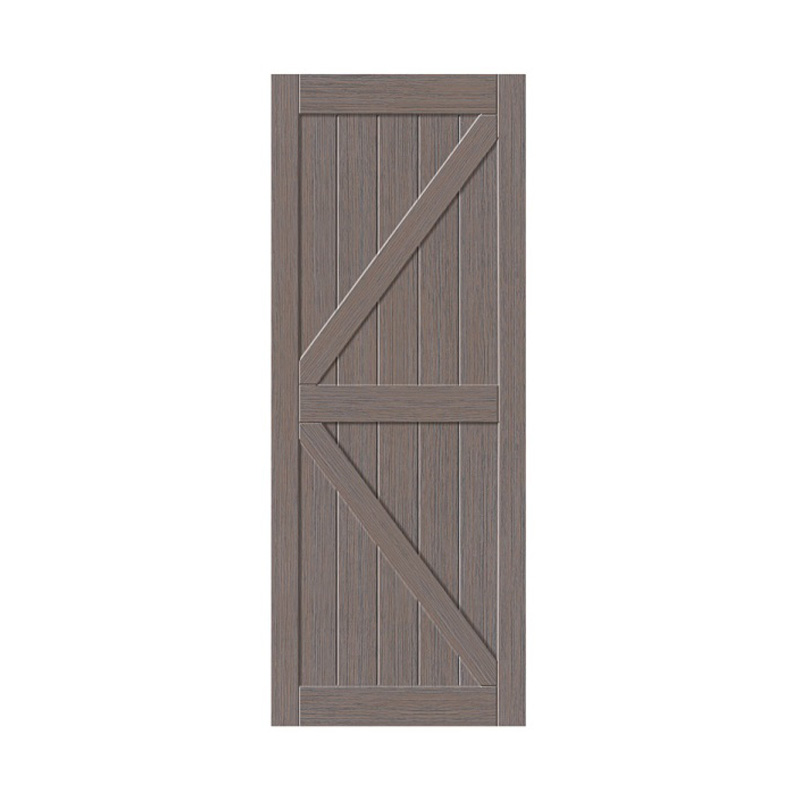
Wholesale buyers increasingly request finish flexibility beyond a factory's standard color range, particularly for programs supplying interior designers or custom home builders who specify paint colors matched to a broader project palette. Primed panels ready for field painting give distributors flexibility for smaller custom orders, while factory-applied custom colors suit larger bulk orders where a consistent finish across every panel in a shipment matters more than the added lead time custom painting requires.
Veneer options for sliding barn door panels have expanded alongside paint customization, giving buyers a natural wood-grain look without the dimensional instability solid wood panels can develop across humidity changes during shipping and storage.
Quality Assurance and Warranty Terms
Buyers auditing new suppliers for this category increasingly request documented quality control checkpoints covering panel squareness, finish consistency, and hardware fit before a bulk order ships, rather than accepting a general quality assurance claim without supporting inspection data. Warranty terms covering warping, delamination, and finish defects deserve equal scrutiny, since a supplier's warranty length often signals confidence in core material stability more directly than a marketing claim about product durability. Distributors comparing warranty terms across suppliers increasingly ask whether coverage extends to freight-related damage discovered after installation, since a warranty limited strictly to manufacturing defects leaves a gap around the shipping damage risk this category faces more acutely than smaller door products.
MDF Door structures its double hung barn doors wholesale program around reinforced freight packaging, documented dimensional tolerances for custom orders, and finish testing across both primed and factory-painted options, giving distributors a sourcing reference built around shipment reliability alongside finished panel quality.




Copyright@ Zhejiang Optima Door Industry Co.,Ltd. All Rights Reserved.
PVC And WPC Doors Company
